The Shadow Organization: The Unofficial Processes That Actually Run the Institution
The org chart tells you where authority is supposed to live. The shadow organization tells you how work actually gets done.

Most institutions have two operating realities.
One is formal: policies, structures, committees, and approved workflows. The other is informal: side approvals, personal follow-ups, unwritten shortcuts, and the few people everyone depends on to ‘make things happen.’
That layer is the shadow organization. Like decision debt, it accumulates quietly. And when institutions depend on it more than their official pathways, they start paying a hidden price in fairness, consistency, resilience, and strategy execution.
Featured Insight
The shadow organization is not a scandal. It is a serious management signal — and it grows wherever the official system fails to serve the real work.
Most transformation efforts fail to produce expected results because leaders redesign the official organization while leaving the shadow organization untouched. The institution looks updated, yet behaves much the same.
Section 01
What the Shadow Organization Really Is
The shadow organization is the informal layer that exists beneath every institution’s official structure. It consists of personal follow-ups, side conversations, unofficial approvals, unwritten exceptions, influential coordinators, and the handful of individuals who know how to move something when the formal path becomes too slow, too fragmented, or too rigid.
Informal approvals
Decisions made through side conversations and private alignment before formal submission.
Unwritten shortcuts
Workarounds that began as exceptions and gradually became the real operating process.
Indispensable individuals
A small number of people who carry institutional memory and know how to unblock anything.
Section 02
How the Shadow Organization Forms
The shadow organization does not form randomly. It grows where repeated friction meets repeated necessity. People do not create informal routes because they enjoy complexity — they create them because formal pathways often do not reflect the real speed, coordination, or judgment that the work requires.
Formal processes are too slow
When approvals are overloaded or routine matters take too long, people search for faster channels. What begins as an exception becomes a habit. Then the habit becomes the real process.
Authority is ambiguous in action
A delegation matrix may exist, yet employees still hesitate because the boundaries of judgment are unclear. Private alignment starts replacing formal ownership.
Cross-functional work has no natural owner
When no single role owns the handoff, coordination shifts to whoever is willing, trusted, or connected enough to keep things moving.
Systems capture the formal route, not the practical one
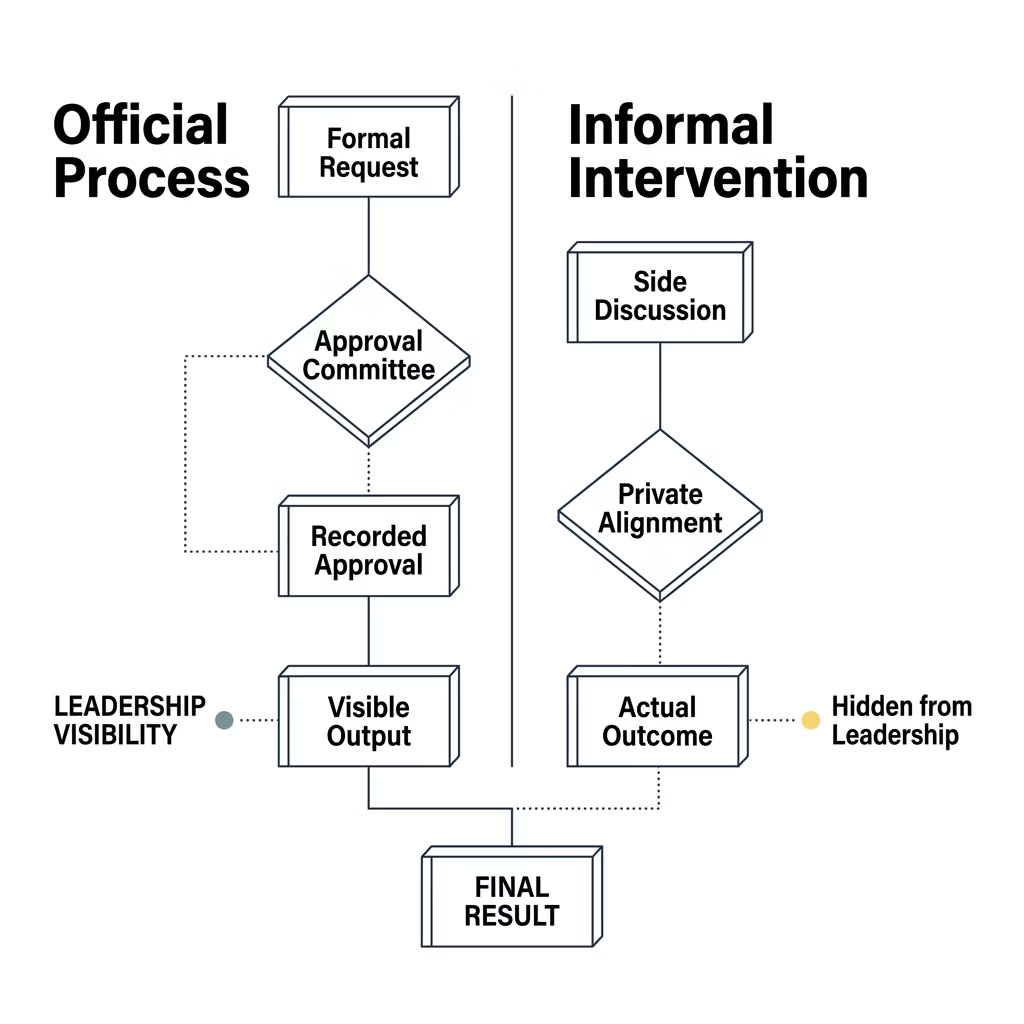
People perform one sequence inside the system and another outside it. The digital record shows compliance, while the real work travels through calls, messages, and relationships.
Culture rewards rescue more than clarity
Some institutions celebrate people who ‘get things done’ through heroic intervention, without asking why heroics are needed so often. Rescue becomes more admired than redesign.
Section 03
The Cost of the Shadow Organization
Institutions usually recognize the shadow organization only after it has become expensive. The costs compound across every dimension of performance.

Fairness
When work moves through relationships more than transparent pathways, outcomes depend on access. Those who know the right people move faster than those who follow the official path.

Consistency
The same issue may be resolved differently depending on who is handling it. Variation increases not because cases are truly different, but because the real process is unstable.

Resilience
Shadow organizations depend on a small number of indispensable people. Once they leave or become unavailable, the institution discovers how much continuity was resting on individuals rather than design.

Control
When decisions occur through unofficial channels, the institution weakens its own evidence trail. The recorded organization and the operating organization drift apart.
Strategy Execution
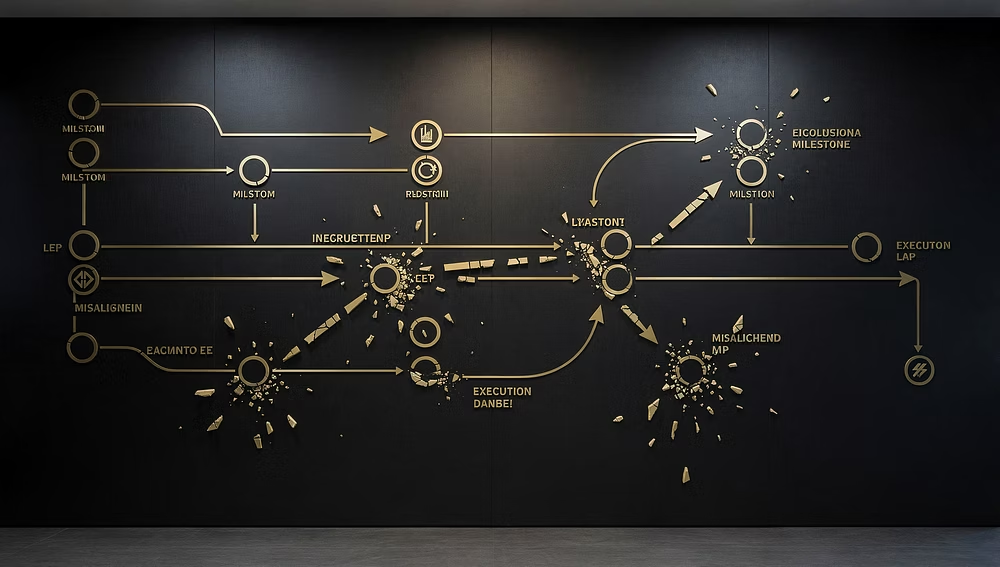
Execution depends on informal energy. Priorities compete through influence, not design. The institution mistakes personal effort for institutional capability.
Section 04
Why Leaders Often Do Not See It Clearly
The shadow organization hides in plain sight because it is woven into everyday success. Projects still get delivered. Urgent requests still get resolved. On the surface, nothing seems broken enough to trigger alarm. In fact, some of the
nstitution’s strongest performers may be the very people holding the shadow organization together.
Leadership sees output and assumes the design is working, when in reality high performers are compensating for weak design every day.
The Illusion of Functioning
Formal reporting rarely measures the shadow organization. Dashboards track process completion, not how many private interventions were needed to achieve it. Systems record approvals, not the informal negotiations that made approval possible. As a result, leaders may believe they are managing the institution they designed, while they are actually benefiting from the institution people improvised.
Section 05
How Strong Institutions Respond
They do not begin by asking, ‘Who is bypassing the system?’ They begin by asking, ‘Why does the system require bypassing so often?’ That shift matters. Institutions that punish symptoms without diagnosing causes only drive the shadow organization deeper underground.

Treat Workarounds as Data
Every recurring workaround is a signal. If people repeatedly call the same individual to accelerate a process, that is a design clue, not just a people issue.

Map the Real Flow of Work
Examine how a decision or service actually moves from initiation to completion — not just how it is meant to move. Identify hidden approvals, unofficial handoffs, and dependency on specific people.

Reduce Friction at the Source
Many shadow pathways grow because the official route is overloaded with unnecessary steps or unclear ownership. Removing one poorly designed approval can be more valuable than adding ten reminders.

Convert Useful Informality into Capability
If teams have discovered a better way to coordinate, sometimes the right move is to formalize it, assign ownership, and build it into the operating model with proper visibility and control.
Internal audit adds the greatest value when it examines whether formal processes reflect how work actually moves — not when it becomes an extra layer validating outcomes that were already decided elsewhere.
Section 06
A Practical 90-Day Starting Point
An institution does not need a major restructuring to begin addressing its shadow organization.

Days 1–30
Select three to five high-friction journeys that matter most — such as approvals, cross-department coordination, customer issue resolution, or executive reporting — and study how they actually move in practice. Not theoretically. In practice.

Days 31–60
For each journey, identify: the unofficial people everyone depends on, the side channels that substitute for the formal path, the steps employees experience as delay rather than value, and the points where ownership becomes blurred.

Days 61–90
Redesign at least one of those journeys so that the official process absorbs what is useful from the informal one: speed, clarity, sequencing, and coordination — without losing accountability, visibility, or control.
A useful test is simple: if the key ‘go-to’ person became unavailable tomorrow, would the work still move? If the answer is no, the institution should not call that agility. It should call it dependency.
Section 07
The Real Sign of Institutional Maturity
Institutional maturity is not proven by how elegant the organization chart looks.
It is proven when the institution that appears on paper is close to the one that operates in reality.
It is proven when new employees can get work done without first learning hidden rules. When stakeholders receive consistent treatment without needing personal access. When cross-functional coordination depends on design more than diplomacy. When the departure of one respected individual does not paralyze an entire stream of work.
The strongest institutions are not those with no informality at all. They are the ones in which informal energy enriches the official model instead of compensating for its weaknesses.
That is the difference between an institution that survives through insiders and an institution that performs through design. And that is why the shadow organization deserves to be studied — not ignored.