Your Website Is a Governance Tool
Not a marketing asset. A public operating surface that reveals how your institution governs information, manages trust, and turns public promises into usable reality.

Core Idea
Website = Governance Surface
The fundamental misread: institutions treat their website as a marketing channel. The reality is structurally different.
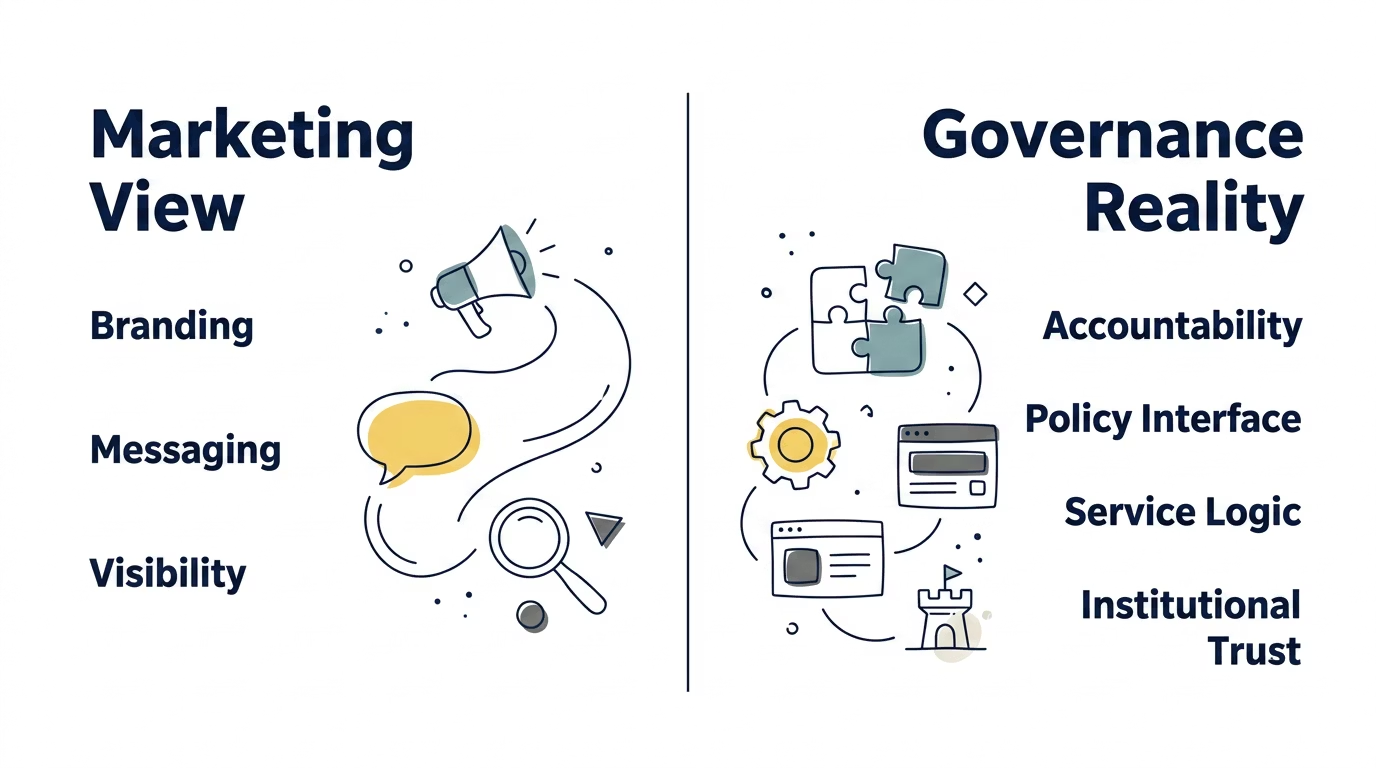
Marketing focuses on visibility and messaging. Governance carries a wider responsibility: instruction, access, accountability, policy, trust, and continuity.
Visible Control Environment
What a Well-Governed Website Shows
Governance does not live only in policies and committees. It becomes real in execution — and the website is one of the clearest places where that execution is visible.

Clear Ownership
Who owns each service is defined and traceable

User Requirements
What is required from the user is explicit and accurate

Process Logic
How processes actually work is reflected in content

Expected Timelines
What timelines apply is communicated clearly

Escalation Paths
How issues are escalated is defined and functional

Current Information
Content is accurate, consistent, and maintained
Clarity, in this context, is not aesthetic. It is operational. If this clarity exists, governance is visible. If it does not — that is also visible.
Institutional Misread
Why Institutions Misread Their Website
Most institutions manage websites as publishing platforms. In reality, they have become convergence points for multiple responsibilities — while ownership rarely evolves at the same pace.
What Institutions Think
- A publishing platform
- A communications channel
- A branding surface
- Managed by one team
What the Website Actually Is
- Service delivery infrastructure
- Policy communication layer
- Compliance and disclosure surface
- Customer interaction point
- Institutional trust signal
- Digital experience environment
The result: a polished homepage masking unreliable content deeper within. Responsibility becomes fragmented. Content becomes inconsistent. The site appears structured while operating weakly underneath.
Critical Framework
Website Failure Is Governance Failure
Public-facing content is not neutral. It defines requirements, shapes decisions, communicates obligations, and reflects institutional intent. When it fails, the failure is structural — not editorial.
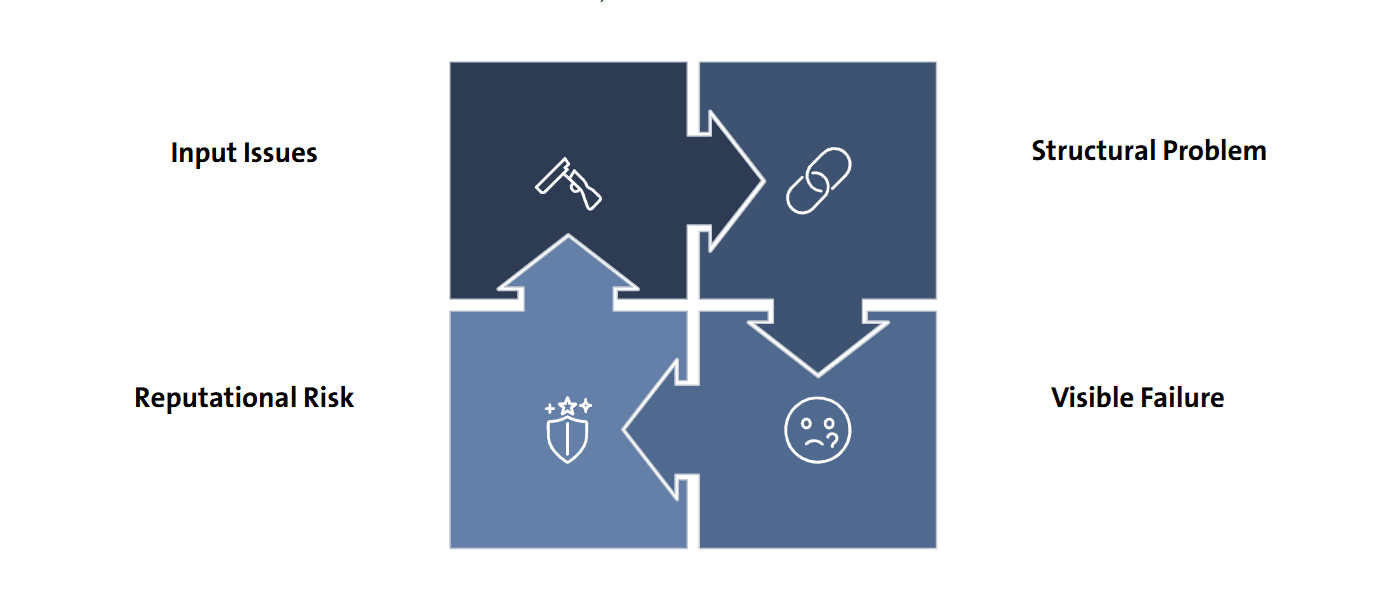
Inconsistent Bilingual Content
→ Policy misalignment
Broken Forms
→ Operational failure
Outdated Instructions
→ Service failure
Empty Sections
→ Execution failure
Even silence communicates. A website acts as a diagnostic tool — revealing where the institution is coherent, and where it is not.
Hidden Functions
The Six Governance Functions of a Website
A well-governed website performs critical institutional roles that extend far beyond communication.

Trust Layer
Clear, current content builds confidence. Dead ends and outdated pages erode it systematically.

Policy Interface
Many users experience institutional policy for the first time through the website — not through official documents.

Service Gateway
Users come to act, not to read. Poor design and broken flows create visible, measurable friction.

Continuity Channel
During disruption, the website becomes the primary communication tool. It must be ready before the crisis.

Accountability Surface
It exposes ownership — whether clearly defined or conspicuously absent. There is no neutral state.

Institutional Memory
It carries public records, decisions, and history. Unmanaged, this memory becomes a liability.
Diagnostic
Weak vs. Strong Website Governance
The signs of weak governance are consistent and recognizable. Strong institutions make a deliberate structural shift.
The result of weak governance is not cosmetic failure — it is operational inefficiency, increased workload, and weakened institutional trust.
Governance Model
The Website Governance Framework
Strong institutions treat the website as an operating system. The key shift: not “Does the site look good?” — but “Can the site carry institutional truth reliably?”
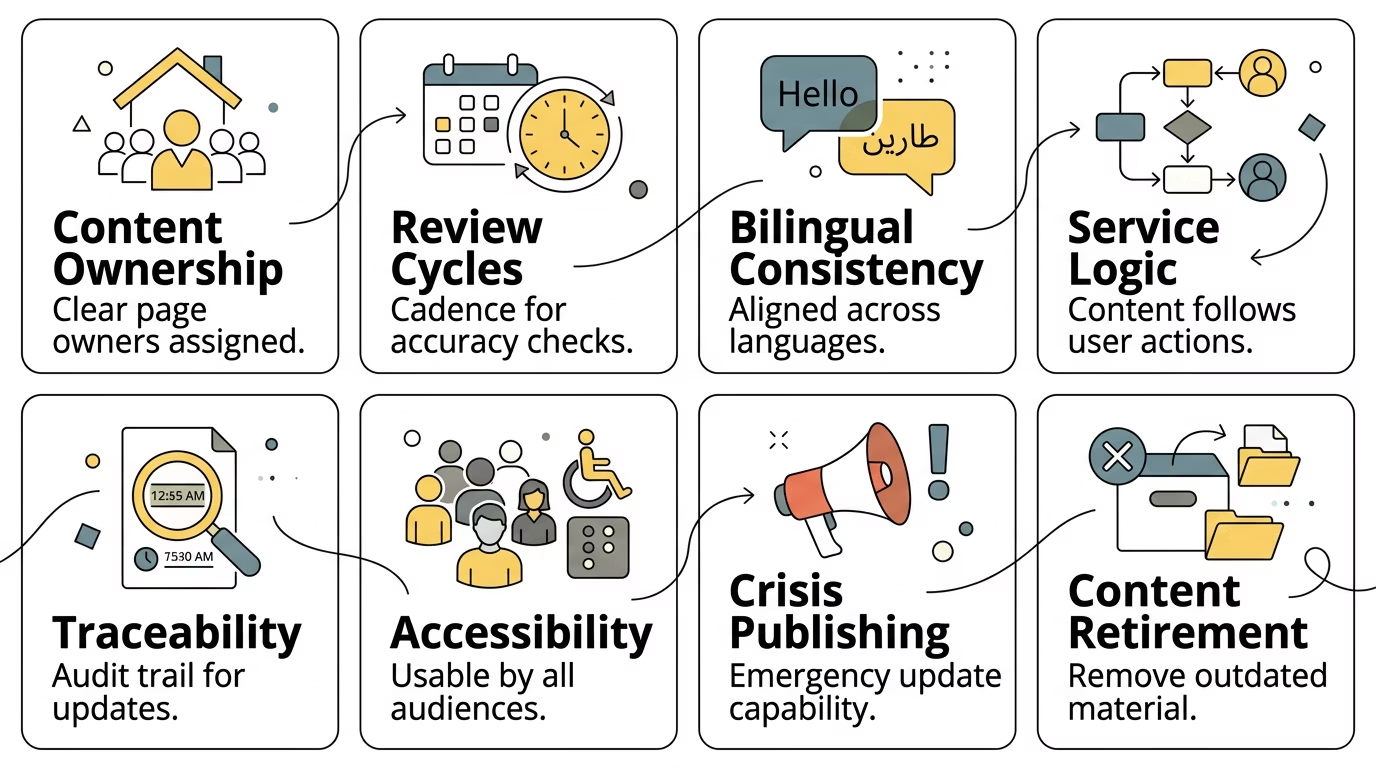
The Strategic Question
Not: Does the site look good?
But: Can the site carry institutional truth reliably?
The Operating Principle
Every page is a promise. Every form implies a process. Every inconsistency signals weakness. Governance makes these promises keepable.
Action Plan
A Practical 90-Day Starting Point
The goal is not complexity. It is reliability. Start with the highest-impact content and build governance infrastructure in three disciplined phases.

Month 1 — Identify
- Map critical pages: services, contact, complaints, policies
- Assign ownership for each page
- Verify accuracy against real operations

Month 2 — Fix
- Prioritize high-risk inconsistencies
- Resolve broken forms and outdated instructions
- Align bilingual content

Month 3 — Govern
- Establish review cadence
- Define publishing workflow
- Build emergency update protocol
- Launch basic governance dashboard
Final Insight
Governance Made Visible
Every Page
Is a promise
Every Form
Implies a process
Every Inconsistency
Signals weakness
Every Gap
Is visible at scale
A mature institution does not leave public clarity to chance. A strong website is not just good design — it is governed information, aligned ownership, usable service logic, and institutional discipline made visible.